Our Blog

Archive for Announcements – Page 5

How to Cut Concrete and Asphalt

How to Cut Concrete and Asphalt

That beautiful stretch of highway you took to get to work? That’s thanks to concrete and asphalt contractors. Unless you work in paving it’s difficult to notice the clean lines, sharp corners, and other detail work that comes with asphalt and concrete but without those details you wouldn’t have a great finished project.

How do contractors achieve such great results on commercial projects? By properly cutting the concrete. Both asphalt and concrete are pretty tough, so what does it take to square off edges and make clean cuts?

Let’s learn how commercial contractors cut concrete and asphalt including the tools of the trade and why professionals might need to cut concrete or asphalt. Both concrete and asphalt are known for their strength, but they’re no match for the right tools and skills.

Why You Need to Cut Concrete or Asphalt

Right of Way Work

Right of way (ROW) roadwork involves contractors having access to highways, trails, driveways, and other areas where they need to work on utilities or other infrastructure. For example, your city might have access to the alley behind your house because it houses utility poles for the whole street.

What does this have to do with cutting concrete? When contractors need access to areas, need to reshape areas, or are renovating areas, they usually perform right of way work like cutting concrete and asphalt. The asphalt and concrete contractors tackle can be anywhere from a quarter inch to a few inches thick but sometimes it must come out. The only way that’s going to happen is by cutting.

Custom Paving Installations

Contractors often need to cut asphalt or concrete for custom paving installations. Custom installations include driveways, access roads, commercial parking lots, and sidewalks to start. To achieve a clean, custom look, contractors utilize cutting methods to square their work.

Let’s figure out how concrete professionals are able to slice through pavement for different types of projects.

How Pros Cut Concrete and Asphalt

Cutting concrete or asphalt with a circular saw gives pavers and contractors the cleanest cut but you can’t put any saw blade on concrete, you need diamonds. Stone-cutting sawblades meant for asphalt and concrete are dusted with fine specs of diamond aggregate to give them superior strength and hardness. The diamond-dusted blades will tear through asphalt, concrete, and other types of paving.

Cutting Concrete with a Circular Saw

Cutting concrete or asphalt with a circular saw gives pavers and contractors the cleanest cut but you can’t put any saw blade on concrete, you need diamonds. Stone-cutting sawblades meant for asphalt and concrete are dusted with fine specs of diamond aggregate to give them superior strength and hardness. The diamond-dusted blades will tear through asphalt, concrete, and other types of paving.

Pros and Cons on Cutting Concrete with Circular Saw

Cutting concrete or asphalt with a circular saw is precise even a strong blade will go slowly through most surfaces. Cutting concrete or asphalt with a circular saw takes patience, skill, and diamond-studded saw blades aren’t the cheapest. If you need the cleanest lines and the most precise cuts, you need a circular saw.

Cutting Concrete with Chipping Hammer

If you’re more concerned with getting unwanted pavement out and not appearances, you can opt for an electric or gas chisel to help cut your concrete or asphalt. There are several types of chipping or jackhammers, but all use a pneumatic chisel to hammer out sections of asphalt or concrete. Concrete contractors use specific chisel sizes and types depending on the surface and type of cut.

Pros and Cons of Cutting Concrete with Chipping Hammer

Where the circular saw is more about finesse, the chipping hammer is more about brute force and getting the job done. Chipping hammers can take out general areas but can’t be used for precise cuts, corners, and molding. When your goal is to remove pavement without a care for how it looks a chipping hammer is the way to go.

Talking to a Concrete or Asphalt Professional

If you need ROW work performed, are looking to install a custom parking lot, or otherwise need to cut concrete, you need to turn to concrete professionals. Look for paving companies like Colorado Pavement Solutions that are local, licensed, have great reviews, and have plenty of experience cutting down asphalt or concrete for medium to large projects.

Colorado Pavement Solutions has the local expertise and tools to cut all pavement to exact specifications for a variety of projects. If you want to know more about different paving projects or learn more about how the job gets done, give us a call today.

Cutting Things Down to Size

Concrete and asphalt are strong but not even they can resist the right tools in the right hands. Whether it’s Right of Way roadwork, a new project, or something in-between, you need the power of diamonds and pneumatics to cut through concrete and asphalt. If you’re ready to see the pros do their thing call Colorado Pavement Solutions for a no-obligation inspection today.

When Can You Open a Commercial Parking Lot After Paving?

When Can You Open a Commercial Parking Lot After Paving?

You can’t underestimate the importance of your parking lot or parking garage. It’s easy for a building owner to forget about the lowly parking lot with all the jobs on their plate but your commercial parking lot is a property’s first impression and should always be taken care of.

When it comes time to repair or replace your parking lot or garage the big question is always the same – how long will it take and when can you open? You don’t want to lose business while your lot is closed but if you know how long things take you can schedule accordingly with little disruptions.

Let’s learn when you can open a commercial parking lot after paving including different time frames for asphalt, concrete, and other factors to consider.

When Can You Open After Asphalt Paving

Brand New Lot

What if you’re building a brand-new base with new asphalt? A new lot is the most intensive of all asphalt work and can take several days to prepare and execute. After the top layer of asphalt is poured, when can you open your lot?

Most asphalt parking lots can be open 48 to 72 hours after new asphalt is poured though you’ll need a little more toward the 72-hour mark if the weather is hot. After 72 hours you asphalt will be ready for vehicles.

Mill and Overlay / Pulverization and Stabilization

Mill and overlay and pulverization and stabilization involve recycling previous asphalt but both end with a fresh layer of new asphalt. The new layer of asphalt should cure from 12 to 24 hours before re-opening your lot to traffic.

Sealcoating

Sealcoating provides a fresh layer of asphalt and protectants to your blacktop to keep it looking great for years. Like fresh asphalt, sealcoat needs proper dry times to perform at its best. After sealcoating you can open your commercial lot to foot traffic in just a few hours and vehicle traffic within 24 to 48 hours.

When Can You Open After Concrete Paving?

Many lots and structures across the country are paved with concrete for its longevity but eventually you have to replace concrete too. Concrete pours are big jobs, so when you can expect to re-open your concrete parking lot?

Normally, most new concrete pours should be left alone for one week before allowing vehicle traffic to drive on your new lot though it can be open to foot traffic in as little as 48 hours. During the initial curing period you should also avoid anything with wheels (skateboards, bikes) from rolling across the new pour. Any concentrated weight could damage your concrete.

One week after new installation you can open your lot to regular vehicle traffic.

When Can You Open After Concrete Sealing?

Like asphalt you should regularly reseal your concrete with a fresh coat of protectant concrete sealer. You won’t need to close your lot for a week for resealing, but you should allow your concrete to dry for 24 hours for foot traffic and 48 hours for vehicle traffic.

Parking Lot vs Parking Garage Dry Times

Do parking lots and garages dry differently? It’s possible, but normally not enough to significantly affect dry or cure times by more than a few hours. Parking lots are exposed to more sun and wind compared to parking garages, so lots might dry or cure slightly faster.

The bigger factor in dry and cure times is concrete vs. asphalt. Concrete cures more slowly than asphalt so you can expect a concrete parking garage to take longer for reopening compared to an asphalt parking lot.

Getting Tips from Your Paving Contractor

Your paving contractor will use their material knowledge, expertise on the local climate, and experience to help you judge when it’s safe to re-open your lot to traffic. Most paving professionals will give you direct timetables to help you plan and execute your new installation with as little disruption as possible.

Re-Opening to Vehicles Quick List

The following list can be used as a guide though ultimately your paving contractor will determine when you can reopen:

  • New Asphalt – 48-72 hours
  • Re-milled Asphalt – 24 hours
  • Asphalt Sealer – 24-48 hours
  • New Concrete – One week
  • Concrete Sealer – 48 hours

Getting Your Concrete or Asphalt Parking Lot Ready and Reopened

New asphalt typically takes 48 to 72 hours to set while new concrete can take up to one week. Before closing your lot talk to the professionals at Colorado Pavement Solutions or your local paving contractor about individual closing times so you know how to plan ahead. With the right planning and a great paving contractor you can be re-open with a beautiful new lot in only a few hours to a few days.

What is Asphalt Pulverizer?

What is Asphalt Pulverizer?

Your commercial asphalt parking lot is dull, filled with cracks, and pocked with divots. Not only is it unsightly to look at, but an old asphalt lot presents hazards to your property’s visitors. When your asphalt has seen better days – what should you do?

Asphalt has a long serviceable life, but it doesn’t last forever and eventually you need to figure out your options for replacing an asphalt parking lot. What’s right for you depends on your lot’s current condition, comfort needs, and budget, so there are many options to look at. One of the best options is asphalt pulverizing.

Asphalt Pulverizer Process

Asphalt pulverizing is the process of grinding up both the top layer of asphalt and its underlying aggregate to create a new base surface for fresh asphalt. During pulverizing, a machine with rotating blades reaches anywhere from 2 to 12 inches down to pulverize different layers of asphalt into one even mix.

Asphalt Pulverizer vs. Milling

Pulverizing and a mill and overlay are similar, but how the old asphalt is dealt with sets pulverizing and milling apart. In asphalt milling, only the top surface layer of asphalt is removed in preparation for a new overlay of asphalt. The top removed layer is recycled into other asphalt products, but the bottom base layer is left intact. During pulverization, both the top layer and underlying stone and aggregate are ground up but reused for the new asphalt.

Compaction and Grading

Before the ground asphalt is ready for the next major steps it has to first be compacted and grated. Most asphalt companies start with a ‘rough’ compaction done by hand or mechanical roller. After the rough compaction, the surface is leveled and graded until the engineers have the right angles they need. After the lot is graded a paving company will use a mechanical compactor to drive everything down. Now the surface is ready for stabilization.

Asphalt Pulverizing and Stabilization

Stabilization is the second major part of the pulverizing process. Without stabilization, the ground up layer will wash away with the first rainstorm.

Stabilizing is the process of overlaying the ground up asphalt with a fresh layer of hot asphalt. The new asphalt is carefully poured on top of the compacted surface to create a solid new blacktop. After a few hours of drying, your lot is ready for vehicles.

Advantages of Asphalt Pulverization

Affordable

With asphalt pulverization you’re getting a much better deal on both material and labor. Because the old asphalt is pulverized and left instead of removed, you avoid a lot of labor costs that come with full replacement. You’re also recycling all the old asphalt into a new base, so you only pay a fraction of the material cost when compared to full replacement.
Better Lifetime than Mill and Overlay

While it won’t give you the same lifetime of a full replacement, asphalt pulverizing traditionally gives more years than a mill and overlay. If you don’t have the resources or energy for a full replacement but need something better than a mill and overlay – asphalt pulverizing hits the sweet middle spot.

Efficient

Asphalt pulverization is more efficient than full asphalt replacement. Again, because the previous asphalt is left in place, you’re skipping many steps which makes for a more efficient process. You can have your hotel parking lot pulverized, graded, and stabilized within a few hours up to a couple days depending on the size of the lot. Full replacement can take anywhere from a full day to a couple weeks to finish. If you need minimal downtime in lot closures and access you should choose the more efficient process of pulverization.

Advantages of Asphalt Pulverization

Limited Lifetime

A freshly pulverized and recoated lot can give you anywhere from five to twenty years of service, depending on the quality of the new coating and climate in your area. A full replacement can last anywhere from ten to thirty years. You’ll get a longer serviceable life from a full replacement, but it will cost more.

Appearance

Most visitors to your lot will have no idea your lot was pulverized instead of replaced thanks to the fresh coat of asphalt, but there are slight aesthetic differences in a pulverized lot compared to a replaced lot. Nothing will beat the shine and appearance of full asphalt replacement but unless you’re incredibly vain about your parking lot, a pulverized lot will work fine.

Starting Asphalt Pulverizing

If asphalt pulverizing and stabilization sounds like the right choice for you and your commercial lot, you need to get the process started by calling Colorado Pavement Solutions. Colorado Pavement Solutions can inspect your commercial asphalt lot, make recommendations on pulverizing or other processes, then get you a complimentary quote on the job. Once everything is signed off, we’ll get started refacing your lot right away with expert care.

The Skinny on Asphalt Pulverizing

Asphalt pulverizing involves grinding up two to twelve inches of old asphalt, mixing and compacting it into a viable surface, then adding a fresh layer of asphalt on top. Asphalt pulverizing is quick, affordable, and looks great. If you’re ready to pulverize your lot call the asphalt the experts at Colorado Pavement Solutions today.

What is Asphalt Emulsion Sealer?

What is Asphalt Emulsion Sealer?

Everyone’s heard of asphalt. Asphalt makes up our highways, runways, and parking lots due to its affordability, strength, and versatility. Though most everyone has heard of asphalt, hardly anyone has heard of asphalt emulsion sealer. To most, not knowing what asphalt emulsion sealer is will never affect their daily lives, but if you manage a commercial property, HOA, church, or other outfit that has asphalt – you need to know about asphalt emulsion.

Let’s learn the basics of asphalt emulsion including why it matters to property owners and what you can use it for. Knowing the basics of asphalt emulsion sealer and how to effectively use it could save you hundreds to thousands of dollars on asphalt maintenance.

Asphalt Emulsion Sealer Basics

It’s time for a little science. What is asphalt emulsion? An emulsion is a mixture of tiny droplets of one liquid into another liquid in which it would normally not be soluble. Emulsions use an emulsifying agent, also known as a surfactant, to allow the two substances to mix. There are several emulsions around you right now like mayonnaise and butter.

In asphalt’s case the emulsion is a mixture of asphalt products and water. Under normal circumstances any oil-based product would never mix with water but with the addition of an emulsifying agent like soap, in the case of asphalt, emulsions allow the two to blend into a uniform mixture.

Once its blended, asphalt professionals can coat the uniform mixture onto asphalt paving like parking lots or neighborhood streets. Asphalt emulsion is a neat mixture of science to make a spreadable and workable substance but what is the purpose of asphalt emulsion?

What is Asphalt Emulsion Used For?

The most popular application of asphalt emulsion sealer is for resealing asphalt pavement. It’s not uncommon to see asphalt emulsion used on highways, parking lots, and even runways at the airport. Asphalt emulsion sealer provides a fresh coat of asphalt to the top layer of your blacktop. A fresh sealcoat can prevent environmental damage from ice and the sun’s rays and people-caused damage like divots and pockmarks.

Asphalt emulsion will not make your asphalt invincible, but it will ward off damage. Think of asphalt emulsion as sunblock and tiny bit or armor over your parking lot. It’s not going to block everything, and it won’t keep all damage from occurring but gives your parking lot a fresh shine and added strength.

Asphalt Emulsion vs Replacing Asphalt

Can you use asphalt emulsion instead of replacing your asphalt? Usually no. Asphalt sealant is used as a barrier to keep your blacktop performing its best but can only be applied over asphalt that’s in good shape and has a solid base.

If your asphalt is near the end of its serviceable life sealcoating will not be effective. Before your asphalt contractor begins the sealing process, they will need to inspect your parking lot and make sure sealing is viable. If not, they will let you know why and what replacements options are available.

Is Asphalt Emulsion Hazardous?

No. Unless you put a drinking straw into a mixture of asphalt emulsion and gulp it down asphalt emulsion is not hazardous and will not cause any damage to your health or the surrounding environment.

Asphalt Emulsion Sealer vs. Coal Tar Sealer

If you’ve dealt with your parking lot for years you’ve probably heard of coal tar sealer. What’s the difference between coal tar sealer and asphalt emulsion?

While coal tar was the king of sealing asphalt for decades, emulsion sealer has become more popular thanks to its higher concentration of solids, longer lasting performance, and environmental friendliness. The U.S. Geological Survey found that most coal tar sealants are filled with carcinogens that could leach into the soil surrounding your home. When it comes coal tar vs asphalt emulsion, asphalt emulsion is the better and healthier way to go.

How to Use Asphalt Emulsion Sealer

Kick and back and relax because unless you have expert knowledge, top of the line equipment, and a whole lot of time to waste you’ll be hiring an asphalt professional to use emulsion sealer on your property or HOA.

To begin the emulsion sealing process the asphalt company will first clean your parking lot of debris like leaves and dirt. After it’s cleaned the asphalt company will inspect the entirety of the asphalt for cracks, pockmarks, and other damage that could compromise your seal. Once small-scale repairs and other issues are knocked out its time for the asphalt emulsion.

Thanks to emulsion properties the mixture can be easily spread across large swaths of parking lot or roadway. The mixture is coated evenly and allowed to dry for a few hours. After the emulsion dries, you’ll have a gorgeous and strong blacktop that’s better equipped to handle the elements.

It’s recommended that parking lot owners have their lots cleaned and sealed with asphalt emulsion every 2-5 years depending on the condition of the asphalt and how well it has been maintained from its original construction. Annual sealing not only make your asphalt look great but could prolong the serviceable life of your asphalt for several years.

Using Asphalt Emulsion for Your Parking Lot

Asphalt emulsion is a blend of asphalt products and water used to seal the top of asphalt for greater looks and a longer lifetime. Asphalt emulsion sealing is easy, affordable, and will keep your parking lot looking amazing. If you’re ready to inject new life into your asphalt call Colorado Pavement Solutions about asphalt emulsion sealing services today.

Hotel Parking Lot Maintenance

Importance of Hotel Parking Lot Maintenance

If it’s one thing you want your hotel to be – it’s inviting. Every hotel needs fluffy pillows and clean carpets, but hotel owners and managers need to extend the comfort across the entire property, including the parking lot.

Every hotel owner or manager has a lot of boxes to check but one that slides to the bottom of the list too often is taking care of the hotel parking lot. Failure to maintain your parking lot could result in big bills but the good news is parking lots only require a few hours of attention every year to look and perform their best.

Let’s talk about the importance of hotel parking lot maintenance, including what the ideal parking lot looks like, and what types of regular maintenance will keep your hotel parking looking great.

What to Know About Asphalt Paving in Winter

The most straightforward answer is yes, you can perform driveway repairs during the cold winter months – but it depends on many factors. Let’s go through the specific factors, so you know if a winter asphalt job is viable for your property.

Hot-Mix vs. Cold-Mix Asphalt

Did you know there are two distinct types of asphalt? Asphalt paving projects utilize hot-mix asphalt, so it is not ideal to pave in the winter. Hot-mix asphalt must remain hot to compact and perform properly. If the ambient and ground temperatures are too low, they will chill the hot-mix asphalt while it is in transport from the production plant to your property. This is not good. The other type of asphalt is cold-mix asphalt. This product is engineered to perform in almost any temperature, so it can be installed in the summer or the winter. Cold-mix cannot be paved, so it will not work for replacing an entire driveway; however, it can be used to repair potholes.

Daily Temperatures

You can do hot-mix asphalt installation in winter only when temperatures are above 55 degrees and rising. Also, asphalt plant production is spotty during the winter months, making it challenging to purchase asphalt from the producers. Asphalt should never be installed on frozen ground. So if you’re looking at a string of days below or close to freezing, it’s best to wait. Asphalt can’t properly mix, set, or cure if the temperature is too cold, and you’ll be left with a low-quality job you’ll have to fix immediately.

However, not everyone gets freezing or bitter temperatures through winter. Though known as a cold-weather state, Colorado can see winter temperatures in the 50’s and even 60’s. Places like the deep south, the high desert, and coastal areas are very unlikely to see a string of freezing temperatures making asphalt work in the winter viable for several parts of the country, including Colorado under limited circumstances.

Trying to schedule a winter asphalt installation is difficult, but if you can find a few days with above-average winter temps and no freezing forecast, you should be able to take on your asphalt job without any issues. If you have concerns, talk to your asphalt contractor about waiting for a better time for a full paving project.

Temperature Fluctuations

Severe temperature fluctuations during installation can also cause deficiencies in your asphalt installation or repair. Even if winter temperatures are well above freezing, look for any wild temperature swings in the forecast and avoid them for new installations. Extreme temperature swings can cause cracking, softening, and raveling.

Precipitation

Precipitation in all forms can be bad for asphalt paving, depending on a couple of factors. Winter brings freezing rain, snow, ice, and other enemies to asphalt that must be monitored. Avoid paving with any precipitation in the forecast. Light rain in the summer won’t cause harm to asphalt if it has already been compacted, but it can cause the asphalt temperature to drop swiftly during the installation process, which is not good.

Importance of Hiring Local Asphalt Company

The most important thing to do when hiring an asphalt company for winter work is to schedule a local asphalt paving company. Local companies know the subtleties of their local environment, including when the asphalt is most likely to take and when you should stay clear of installing new asphalt. A local company will tell you outright if winter installation is a bad idea, and when your asphalt installation is more viable.

Get Paving (Maybe in Winter)

If temperatures are warm, if there’s no precipitation in the forecast, and if your local contractor thinks you’re good to go – you can do asphalt in the winter. If your asphalt job can’t wait and your environment allows it, talk to a local paving contractor about getting on the schedule. If you have miserable cold winters, schedule your project for spring installation. Cold weather and asphalt don’t get along very well, but with patience and the right contractor, you can make it work – but only if mother nature allows it.

Can You Pressure Wash Asphalt?

Asphalt is one of the top two paving options in the world and for good reason – asphalt is strong, affordable, and looks great. A beautiful and shiny new blacktop can increase curb appeal and make your property look great, but what does a homeowner need to do to keep that appearance up?

Clean, beautiful asphalt that lasts multiple decades won’t happen unless you take care of minor chores, like cleaning and sealcoating your asphalt. There are a few different options for cleaning asphalt but what about the pressure washer in your garage? Can you pressure wash asphalt?

Can You Pressure Wash Asphalt?

Yes, you can pressure wash asphalt but before you wheel out your washer and crank it up, you need to take certain steps for the most thorough job that won’t harm your asphalt.

How to Pressure Wash Asphalt Driveway

Let’s learn if pressure washing asphalt is a good idea, alternatives to pressure washing, and other steps to keep your asphalt shiny and strong.

Clear the Asphalt

Your first job is to clear your asphalt in preparation for pressure washing. Remove furniture, planters, and any other fixture near your driveway before sweeping everything off with a push broom or leaf blower. The more debris you move off, the better the asphalt will take to cleaning.

Check for Issues

Walk your asphalt and check for issues like pitting, pockmarks, gouges, and cracks. Circle these with chalk and try to stay away when pressure washing. The force of pressure washing can worsen current problems. If possible, aim to get these issues fixed by an asphalt contractor prior to pressure washing.

Clean Stains

Use DIY methods like kitty litter or asphalt-appropriate degreaser to remove oil and other stains from the driveway. Even a strong pressure wash will have a tough time eliminating oil stains without pre-treatment and could damage your asphalt if you water pressure is concentrated in one spot for too long.

Start Pressure Washing

When your driveway is clean and oil stains are treated it’s time to use your pressure washer. Start the pressure washer on a low setting and work methodically from one side of the driveway to the other. If your driveway is sloped begin on the high side and work your way to the low end to avoid blasting dirt and debris over previously cleaned spots.

Warning: Asphalt is strong but not invincible. Turn your pressure washer setting to the lowest setting that still cleans dirt and grime for your asphalt. High settings could cause damage or make existing problems worse. Avoid keeping in one spot for too long.

Can Pressure Washing Damage My Concrete Driveway?

Pressure washing can be an effective way to clean your concrete driveway, but it must be done carefully to avoid potential damage. Here are some considerations:

Pressure Level:

Using a pressure washer with too high a pressure level can damage the surface of your concrete. It’s best to use a pressure washer with adjustable pressure settings and start with a lower pressure to avoid any harm.

Nozzle Choice:

Use a wide-angle nozzle or a surface cleaner attachment rather than a narrow, high-pressure nozzle. This helps distribute the pressure evenly and minimizes the risk of surface damage.

Cleaning Solutions:

Use appropriate concrete cleaners or detergents to help break down stains and dirt, reducing the reliance on high-pressure washing.

Maintain Distance:

Keep a safe distance between the pressure washer nozzle and the concrete surface. Start farther away and gradually move closer until you find the right distance that effectively cleans without causing damage.

What Can I Do If I Damage My Concrete?

If you accidentally damage your concrete parking lot, there are several steps you can take depending on the extent of the damage:

Minor Cracks:

For small cracks, you can fill them with a concrete crack filler or patching compound. Clean the area, apply the filler, and smooth it out. Follow the product instructions for the best results.

Potholes:

Larger holes or depressions may require more extensive repairs. You may need to cut out the damaged area, fill it with fresh concrete, and level it properly. This process may require professional assistance.

Surface Stains:

For surface stains, consider using concrete cleaning agents or pressure washing. Stubborn stains may require more specialized stain removers.

Regular Maintenance:

To prevent future damage, engage in regular maintenance, such as sealing your concrete every few years to protect it from moisture and stains.

Consult a Professional:

If you’re uncertain about the extent of the damage or the repair process, it’s advisable to consult with a professional concrete contractor. They can assess the damage and provide guidance on the best course of action.

How Often to Pressure Wash and Reseal Driveway

Many homeowners choose asphalt thanks to its beauty and great value, but that asphalt needs to be maintained to look and perform its best for years. For most homeowners this means a thorough cleaning and reseal every 1-2 years. If possible, talk to the original asphalt installer to determine how often you should clean and reseal your asphalt.

Is it Good to Use Power Washing Asphalt?

Homeowners can use a pressure washer to clean their asphalt but should always use caution to not damage the asphalt and should always reseal after a thorough cleaning. If the homeowner can take care of cleaning and sealing every one to two years, your asphalt will reward you with strength and a gorgeous jet-black shine for years to come.

Alternatives to Pressure Washing Asphalt

Pressure washers make quick and thorough work of cleaning a driveway but not everyone has a pressure washer available. If you’re lacking the power of a pressure washer you can still clean your asphalt but it will take longer.

You’ll need:

  • Large bucket
  • Push brush
  • Asphalt-appropriate cleaner – available at your local home improvement store

Like pressure washing, you’re encouraged to work methodically from one area to the other and uphill to downhill. Follow the directions for the cleaning solution and get prepared to sweat while you scrub up months of caked on dirt.

After you’ve finished scrubbing, work down the driveway again with a garden hose and spray off the excess dirt and grime. It’s going to take more time and sweat but a proper cleaning is how you get your asphalt ready for the next step.

Resealing Asphalt

Resealing asphalt, not cleaning, is the most important step to keep your asphalt durable and beautiful for many years. Sealing asphalt provides a fresh new protective layer on top of asphalt that will not only look great but protect your asphalt from common issues like fading and gouges.

Don’t hit yourself if you’ve put in a lot of elbow grease to clean your driveway, as that’s the first step for a proper reseal. After you clean your driveway, let it dry out completely (12-24 hours) before applying sealcoat.

Homeowners can clean and reseal their driveway by themselves, but it’s recommended you leave resealing asphalt to a professional. A professional can inspect your asphalt, fix any issues that could harm resealing, then apply sealcoat with a professional hand to make your asphalt look brand new.

If you choose to reseal yourself read over the instructions carefully and be sure to purchase a product that is only intended for asphalt.

Gravel Driveway Snow Removal

Gravel Driveway Snow Removal

Gravel driveways look great, last for decades, and add character to your property that you just can’t find in concrete or asphalt. Gravel driveways have many benefits, but those benefits do not include easy snow removal.

Because gravel isn’t a solid surface like concrete or asphalt, it takes some extra work to remove snow, but it’s not too difficult if you know what you’re doing. Let’s figure out gravel driveway snow removal including how you can take care of things as a homeowner and when it’s best to call in the professionals.

How to Remove Snow from a Gravel Driveway

Using Shovel and Rake

If you don’t have a large patio or driveway to clear you can take the old-fashioned approach of shovel and rake. Start at the top of your area and work downhill or toward an outlet, clearing off layers at a time if you need to. Once you’ve gotten the bulk of the snow off with the shovel you can use a rake to remove / break up the remaining snow in the gravel to help it melt sooner. It’s recommended to try a few different types of rakes like gardening or a roof clearing rake to see what works best in your gravel.

Using Leaf Blower

Don’t put your leaf blower away after fall, you’ll need it for your gravel driveway. Leaf blowers are surprisingly effective for freshly fallen snow and can save you a good deal of backbreaking labor. A leaf blower can rid your driveway of snow in minutes, but it only works well on fresh, dry snow and will be ineffective on any ice buildups.

Using Snowblower

If you have a large driveway to clear, a snowblower will be much more effective. You can’t just plop your blower down on your gravel driveway or you’ll scatter gravel all over the place, but you can cleanly remove snow off gravel with the help of skid shoes.

Skid shoes, also known as skid plates, are adjustable pieces attached to the snowblower that raise or lower the auger for different surfaces. Raise the blower to at least a half inch high on the skid shoes to avoid shooting rocks into your front window. The bigger your gravel’s size, the more clearance you’ll need on the snowblower.

Using Plow

Set your plow blade too low and you’ll accidentally plow your entire driveway up along with the snow. Like using a snowblower, you can adjust a plow to hover a half inch to inch above your driveway to only remove what you want to.

Remember, you can always plow more but you can’t exactly slide your gravel back into place if you accidentally scoop it up. Take your time and check your tracks to be sure you’re at the right height.

Salting Your Gravel Driveway

Before a big snowstorm hits and after you’ve plowed you should apply rock salt or melting agent to your gravel. Salt lowers the melting point of snow and ice to keep it from re-accumulating on your gravel.

Hiring Gravel Driveway Snow Removal Service

Gravel driveway snow removal is notoriously difficult, especially if you don’t have a plow or snowblower but luckily snow removal services can help clear your driveway while you sit inside and enjoy the warmth.

There are more benefits to professional snow removal services than you think. If you make a mistake and plow too much, you’ll have to carefully re-work your gravel back into place, something you don’t need to worry about when you hire a professional. Professionals will check your gravel, make sure their equipment is at the appropriate settings, and expertly clear the bulk of your snow while leaving your driveway intact.

If you’re worried about the price you should contact a local snow removal service for quotes. Most snow removal companies can look at your driveway’s specifics and negotiate a one-time price or a seasonal contract. Any reputable snow removal company will offer a quote of services free of charge.

Does Gravel Driveway Snow Removal Cost More?

Since snow removal on gravel driveways takes more care and effort, prices are normally higher compared to concrete or asphalt surfaces. Snow removal companies charge by the hour and will take more time to clear a gravel driveway but will leave your driveway looking great when the snow melts away.

Clearing Snow off Gravel Driveways

Clearing snow off a gravel driveway takes more time and patience than traditional driveways but most homeowners take on the effort thanks to gravel’s rustic appearance and affordability. If clearing yourself take your time with removal and work in layers if necessary or leave it to the professionals by hiring a reputable snow removal service. Gravel driveway snow removal might take a little more effort, but it can be done.

Handicap Parking Striping Requirements

Handicap Parking Striping Requirements

Taking care of the parking lot and the visitors that use it is one of a building owner or manager’s top concerns. A parking lot should be clean, well-organized, and should make accessibility to the building as easy as possible. There are a lot of boxes to check for a great parking lot or structure, but accessibility is one of the main ones.

You need to make sure everyone can easily access your building and that includes any potential visitors with mobility or other issues. The easiest way to take care of that? By meeting all Americans with Disabilities Act (ADA) guidelines. Making your sure your parking structure or lot complies to ADA standards is not a suggestion, it’s the law.

Depending on your lot there are a few different things you must accomplish but one that’s critical for all public parking lots is ADA-compliant handicap parking spaces and striping. Let’s learn more about ADA parking requirements by reviewing proper striping, spacing, and other things to do to take care of all your lot’s visitors.

ADA Parking Requirements

If you have to stripe your own lot take the guesswork out by visiting reliable resources on ADA parking requirements. The gold standard for ADA compliance is found at the United States Access Board’s website Access-Board.Gov. All ADA requirements including general standards, surfaces, ramps, and parking lot striping requirements can be found on the site.

Let’s review the more basic principles of ADA space requirements like how many spaces are required, how wide they need to be, and other need to know information regarding handicap spaces and striping.

How Many Handicap Parking Spaces are Required?

The number of required handicap parking spaces depends on the number of total spaces and the lot’s layout. It’s best to use the chart at Access Board to determine your required spaces but there are some general rules all lots must follow:

  • Every parking lot, or separate portion of a parking lot or structure (like different levels) must have at least one handicap parking space that is van accessible.
  • One in every six handicap parking spaces must be a van-accessible parking spot for lots with less than 500 spaces.
  • After 500 spaces but before 1001, van accessible parking must make up 2% of total spaces.
  • After 1001 the lot is required to contain 20 van-accessible spots plus 1 for every 100 spaces after 1,000.
  • The number of standard handicap parking spaces depends on the number or total parking spaces in your lot. Again, the handy chart provided by the Access Board is a go-to to answer all questions on how many handicap parking spaces are required.

How Wide is a Handicap Parking Space?

Standard Handicap ADA Parking Dimensions

  • Consist of parking space and adjacent access aisle
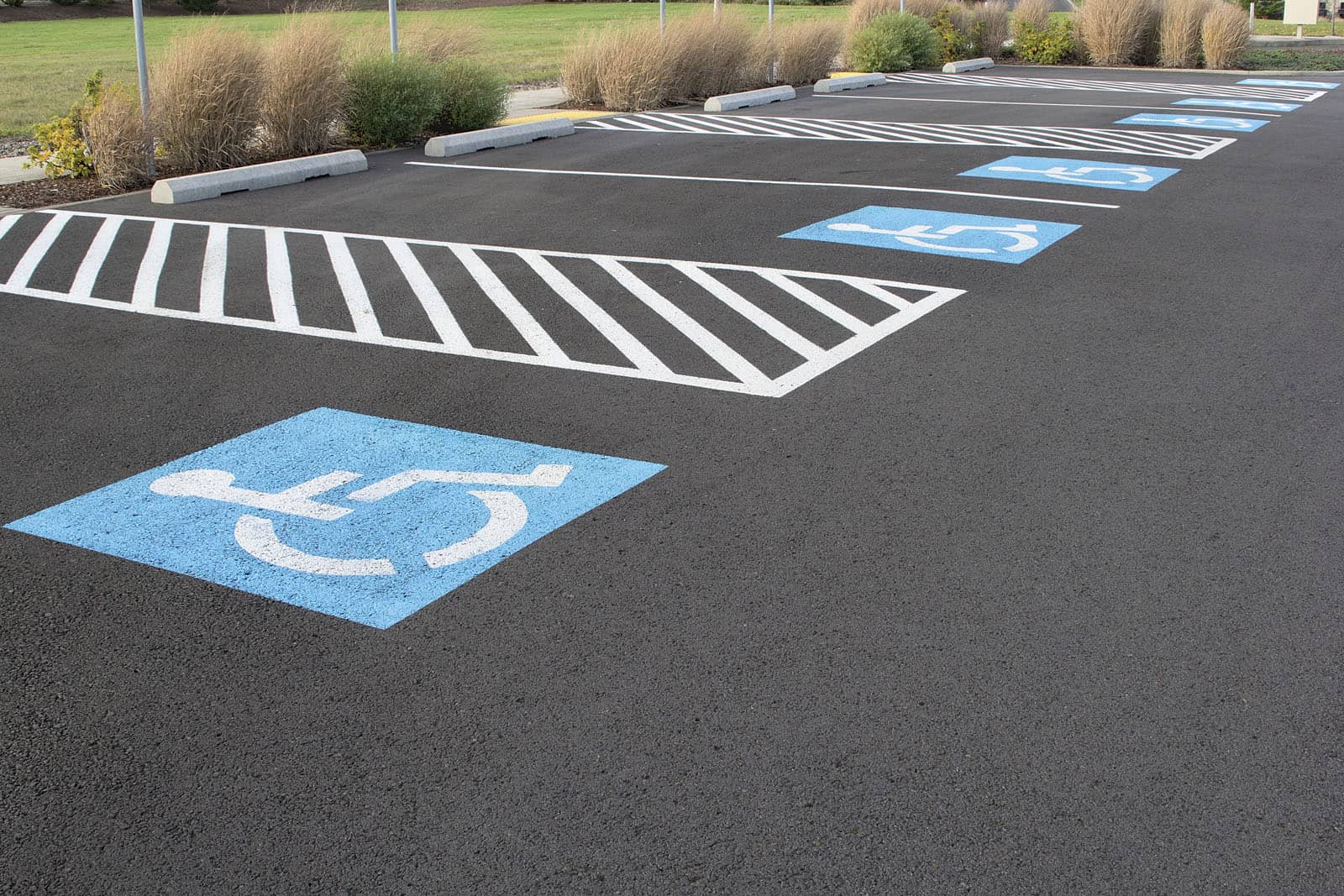
  • The access aisle must be boxed in and painted with diagonal stripes.
  • Parking space must be at least 8’ wide
  • Adjacent access aisle must be at least 5’ wide

Van-Accessible Handicap ADA Parking Dimensions

  • Consist of a space and adjacent access aisle
  • The access aisle must be boxed in and painted with diagonal stripes.
  • Entire spot including access aisle must measure 11’ wide (8’ for parking space is allowable if the access aisle is also 8’ wide.)

Other ADA Space Requirements

  • All handicap spaces must be fitted with curb stops.
  • All aisles and spaces should be at same level they are serving.
  • Handicap spaces can only be striped over a level surface
  • All handicap spaces must include standard handicap or van-appropriate signage according to ADA design standards.

Using a Professional to Meet ADA Parking Requirements

Unless you have a small parking lot, chances are you’re going to hire out your parking lot’s striping including handicap parking spaces. During the hiring process its important to only hire a reputable parking striping and marking company that’s well versed in all proper ADA space requirements and knows how to bring your lot to code.

Always check a potential hire’s reviews, personal referrals, and any other pertinent information like city license number or insurance documentation. If you hire a striping company that doesn’t know what they’re doing you could face large fines and citations and any potential customers with mobility issues won’t be visiting your building.

Inspecting ADA Parking Requirements

In the case of a new lot you can have your handicap spaces and other ADA compliance checked before, during, and after the lot’s installation. You must check with your local building department and paving company to find out if ADA compliance is a part of their inspection process. If not, you can hire a third-party service to verify proper spaces and striping before the lot opens. You can also hire third-party ADA inspection services after a re-stripe.

Giving Accessibility to Everyone

The last thing you want is to accidentally turn service away or insult a potential customer by not ensuring your handicap striping and lot are up to snuff. To be certain everyone who visits your lot is taken care of, research handicap parking striping requirements, only hire a reputable company that knows how to meet all ADA parking requirements, and double-check everything with a city or third-party inspection.

If you can check all those boxes, you’ll be certain you’re up to code and that everyone is able to access your lot and building safely and comfortably. If you have any questions about handicap parking striping requirements, call Colorado Pavement Solutions at 720-772-0585.

Is Asphalt or Concrete Better in Cold Climates?

Is Asphalt or Concrete Better in Cold Climates?

Pavement in the U.S. is dominated by two major players – asphalt and concrete. When it comes time to pave your Colorado sidewalk, driveway, or private roadway, you’re probably going to choose asphalt or concrete, but which one is best?

It’s difficult to say that asphalt or concrete is better than the other since your individual project and budget will help determine which to choose but one big factor that can influence your decision is something Colorado is popularly known for – a cold climate.

Extreme temperatures including freezing cold can affect concrete and asphalt differently, so you better know which is best when deciding on your new driveway or patio. Let’s learn is asphalt or concrete better in cold climates including how Denver and Colorado’s unique weather can influence your decision.

Installing Concrete in Cold Climates

Concrete, along with steel, is arguably the most important basic building material in the world, but how does it fare in the frigid temperatures of a Colorado winter?

Benefits of Concrete in Cold Climates

  • Low Maintenance – Concrete needs little maintenance throughout its life, even in cold climates. Cold climate issues like ice can affect concrete, but it doesn’t come with maintenance requirements like sealcoating that asphalt requires.
  • Longevity – Concrete is a popular for one big reason – its strength and longevity. Asphalt can last anywhere from 10 to 30 years while a properly formulated and poured concrete installation can last up to 50. If you never want to pave again concrete is a solid choice.

Cons of Concrete in Cold Climates

  • Heaving – Water and ice can penetrate pockets underneath your concrete and cause it to heave upward. Heaving can be fixed but it’ll come at a cost.
  • Prone to Stains – Concrete is more likely to be damaged or stained by common winter materials – like salt. Snow-melt salt can eat into and weaken concrete, slowly reducing its useful life. Other melting compounds like blue chemical salt can also stain concrete.
  • Prone to Cracking – The temperature swings of Colorado’s winters can be too much to handle for concrete and could result in cracking.
  • Expensive Fixes – Concrete is can be more expensive to repair than asphalt.

Asphalt in Cold Climates

Asphalt might not be used to build skyscrapers, but it’s one of the most abundant pavement surfaces in the country. Let’s find out why you’re more likely to find asphalt installed in areas with cold climates like Denver compared to concrete.

Pros of Asphalt in Cold Climates

  • Affordable – No matter what climate you’re installing in, asphalt is an affordable option. Depending on your needs, asphalt can be half the price of concrete. Asphalt is not known to last as long as concrete but a 15 to 30-year lifespan and affordable replacement cost keep asphalt among the most popular paving materials in all climates.
  • Bend but Not Break – Asphalt expands and contracts with the wild temperature swings of Colorado winters, but it’s not likely to break. The ability to handle extreme temperatures without breaking is a great reason to install asphalt over concrete for your Denver project.
  • Easy Fixes – it’s easy to fix cracks and pockmarks in asphalt, though permanent fixes require warm outside temperatures. Asphalt repairs are much more affordable than concrete repairs.
  • Melts Ice Faster – Due to its dark color, asphalt tends to melt snow faster than concrete.

Cons of Asphalt in Cold Climates

  • Can Only Patch in Winter – Asphalt requires warm temperatures for proper patching or installation. You can use cold mix asphalt to take care of small asphalt fixes during the winter, but any major repairs or projects require the warmer temperatures of spring and summer.
  • Requires Maintenance – Other than fixing cracks or divots, concrete does not generally require much maintenance. Asphalt requires a new sealcoat annually thanks to the harsh wind and ice of Colorado winters.

Using a Pavement Professional to Decide on Asphalt or Concrete

Both concrete and asphalt have their unique benefits in colder climates though asphalt does have a slight edge in Colorado’s varying climate. If you’re stuck deciding, take the guesswork out and call a local paving professional for their input. A professional paving company can look over your individual pavement needs, talk budget, and recommend asphalt or concrete based on your needs. Once you’ve talked budget and needs you can make an informed decision on asphalt vs. concrete.

Choosing Asphalt or Concrete for Colorado’s Cold

Both asphalt and concrete are great paving materials but ultimately our nod goes to asphalt for Colorado paving installations thanks to its affordability and bend but not break endurance. If you’re ready to start your own concrete or asphalt project reach out to Colorado Pavement Solutions and let us determine the best choice for your situation – no matter how cold it gets.

Request Estimate